
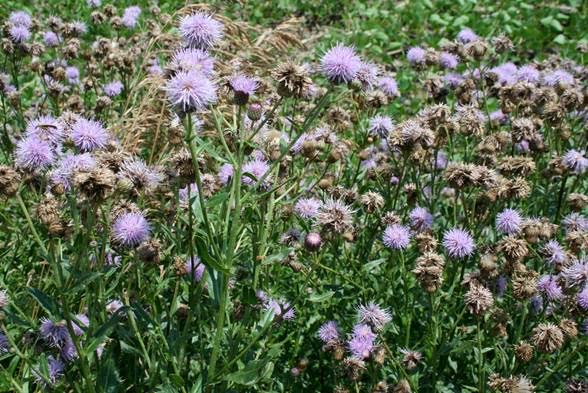
Weeds are often described as invasive, noxious, alien, or exotic. Despite these different labels, all weeds share a common characteristic: they are unwanted in our yards and landscapes. Invasive weeds pose challenges by outcompeting native plants throughout our region. This competition leads to a range of issues, such as increased erosion, reduced wildflower availability for pollinators, instability of stream banks, loss of biodiversity, and higher maintenance costs for farmers, gardeners, and landowners.
Controlling weeds is often challenging due to limited available resources. In many cases, individual landowners are responsible for managing weeds on their own property. If you need assistance with identifying weeds, learning best practices for control or prevention, or are interested in volunteering, please contact us at 541-386-4588. We are committed to helping you with any weed-related concerns.
False Brome
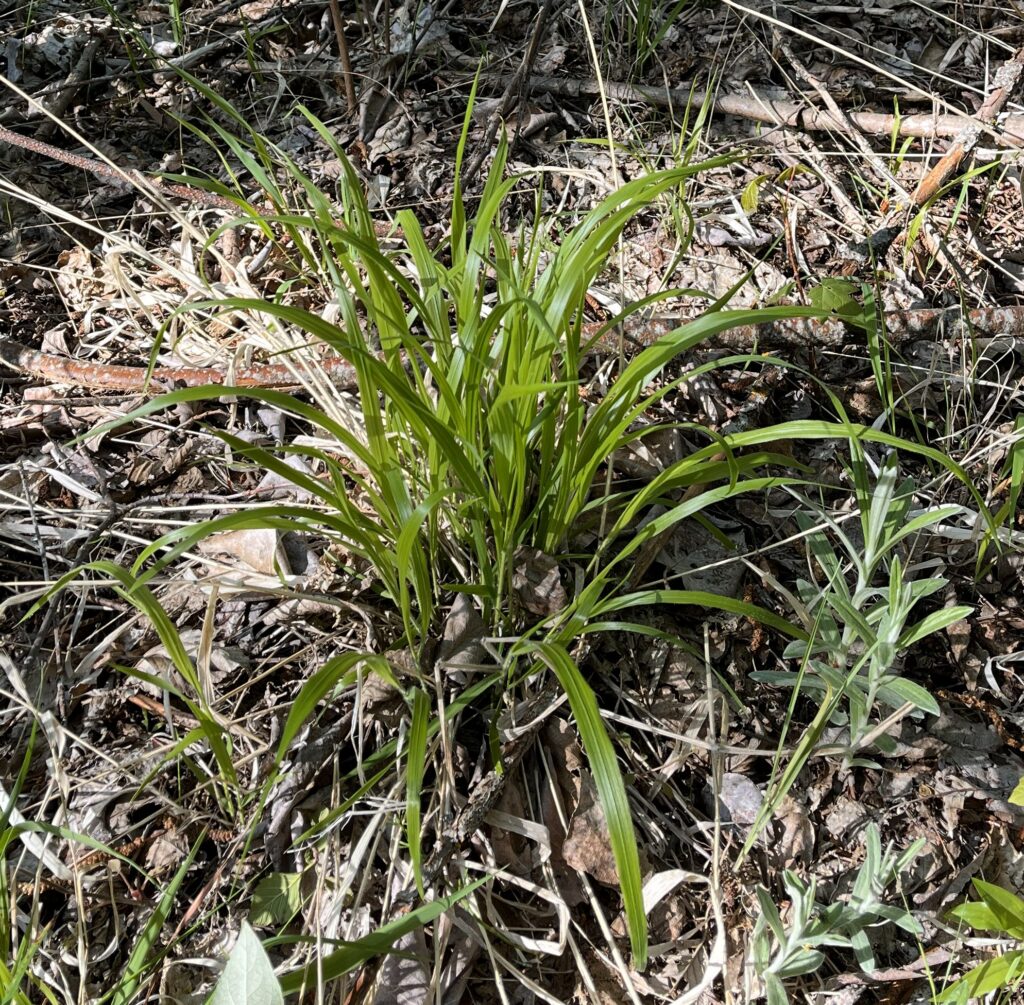
This bright lime green bunchgrass is known for its rapid spread through seed production. This invasive plant forms dense colonies that can thrive in a variety of conditions, including both sunny and shaded areas, as well as moist or dry soils. It is commonly found from low elevations up to approximately 3,500 feet. False Brome (Brachypodium sylvaticum) has two characteristics that help distinguish it from other grasses. First, the plant is covered with small hairs or “fuzz,” giving it a distinctive hairy appearance and a velvety texture. Second, it flowers are produced in spikelets that are stalkless and directly attached to the stem.
False Brome is designated as an A weed by the Columbia Gorge Cooperative Weed Management Area and a B weed by the Oregon Department of Agriculture. The thick mats created by False Brome crowd out native plants species, resulting in a monoculture that offers little forage value for local wildlife.
In 2025, False Brome was identified at Toll Bridge Park up in Parkdale. The SWCD, in collaboration with Hood River County Parks, Oregon Department of Agriculture, and the United States Forest Service-Mt. Hood National Forest conducted an area-wide survey to assess the extent of the infestation. Funding provided by an Oregon State Weed Board Grant allowed contract crews to spray the affected areas during the spring of 2025. The SWCD plans to continue the collaborative management efforts in the spring of 2026 to further control the spread of False Brome.
Garlic Mustard
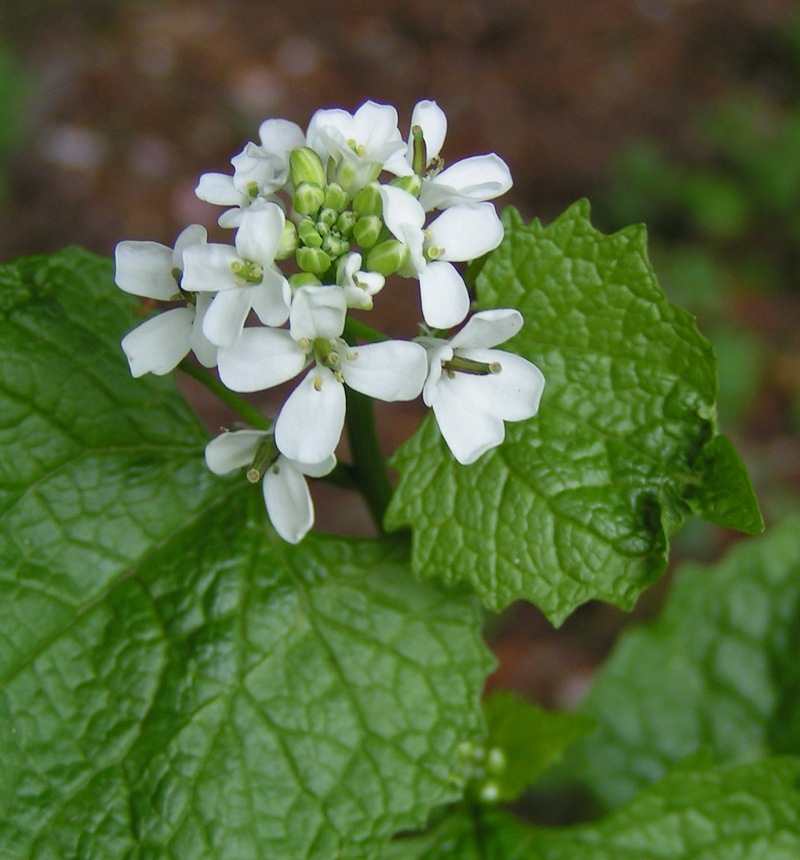
The SWCD’s quest continues with our on-going efforts to control Garlic Mustard (Alliaria petiolata) in two known areas within Hood River County. Garlic Mustard is a cool-season biennial herb that can be identified by stalked, triangular to heart-shaped leaves with coarse teeth. When these leaves are crushed, they release a distinctive garlic odor. During its first year, Garlic Mustard forms a rosette of green leaves close to the ground, which can resemble violets during the rosette stage. These rosettes remain green throughout the winter and grow into mature, flowering plants the next spring. Flowering Garlic Mustard plants reach heights of 2 to 3-½ feet and produce clusters of small white flowers, each with four petals arranged in the shape of a cross.
* NOTE – Although Garlic Mustard is considered a biennial plant, meaning it typically completes its life cycle in two years, many first-year plants have been observed to flower and produce seeds.
Garlic mustard is classified as a noxious weed, originally brought over as a culinary herb from Europe. The Columbia Gorge Cooperative Weed Management Area (CWMA) designates it as an A weed, while the Oregon Department of Agriculture (ODA) lists it as aboth a B and T weed. This invasive species is highly adaptable and can thrive in a wide range of environmental conditions, including sun or shade, wet or dry soils, and both forested and open landscapes. Garlic Mustard reproduces rapidly and has the potential to become the dominant species within an ecosystem. Additionally, it alters soil composition, creating conditions that favor its own growth and make it more difficult for understory plants and young trees to survive.
The Hood River SWCD has received numerous grants from various funders to support thirteen consecutive years of control work at two upper valley sites. Working in cooperation with ODA, United States Forest Service, Hood River County, private landowners and other partnering organizations belonging to the Columbia Gorge Cooperative Weed Management Area (CWMA), we are using an integrated pest management approach to control the pest. This strategy includes manual methods such as hand-pulling, chemical controls using herbicides, and cultural practices like mulching. These efforts have been ongoing since 2011, with the goal of reducing Garlic Mustard infestations in the region.
Weed of the Month
The Weed of the Month campaign began back in 2015 when the SWCD, the Columbia Gorge Cooperative Weed Management Area, the Hood River County Weed Board, and the Central Gorge Master Gardeners began presenting an informational series of monthly weed alerts. The series begins in April and runs through Decemeber and is designed to raise public awareness about weeds of concern in our area. Species targeted include: Garlic Mustard, Scotch Broom, Knapweed, Puncturevine, Japanese Knotweed, Rush Skeletonweed, English Ivy, Canada Thistle, Tree of Heaven and many more. Additional information is available through the Master Gardeners at farmers markets and plant clinics, as well as brochures that are distributed at various locations.